
Learn how to organize your sewing room so you can spend less time hunting for your favorite scissors and more time actually sewing.
Whether you’ve got a dedicated studio, a corner of the dining room, or a folding table you pull out between meals, these sewing room organization tips for quilters will help you make sense of the creative chaos.
This isn’t about picture-perfect Pinterest rooms or color-coordinated everything.
It’s about real, usable systems that keep your fabric, projects, and tools within reach — so your space works for you, not against you.
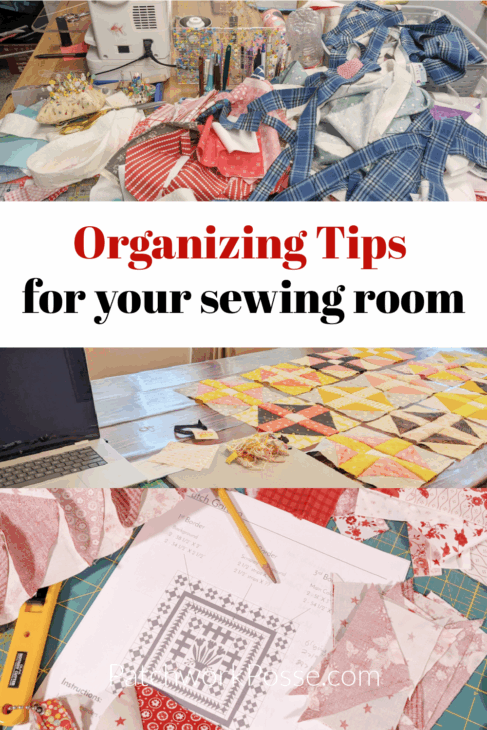
When Your Sewing Room Starts Talking Back 🙂
Let’s be honest: it doesn’t take much for a sewing room to tip over the edge. One weekend of quilting, a new fabric bundle, or a project “in progress” that quietly multiplies while your back is turned… and suddenly, your cutting table disappears.
If you’ve ever spent fifteen minutes searching for a seam ripper only to find it hiding under a fat quarter stack (next to the rotary cutter you swore you’d just put away), you’re in good company.
I remember the day I realized things had gotten out of hand. I needed to trim one quilt block. One. Instead, I spent an hour shifting piles around, discovered three UFOs I’d forgotten about, and gave up to make a snack. That was the moment I decided the sewing room needed an intervention.
Getting organized doesn’t have to mean buying matching bins or fancy furniture. It’s simply about knowing where things are and making your space welcoming again — so you can sew without the sighs.
Why an Organized Sewing Room Matters
An organized sewing room isn’t about perfection; it’s about peace.
When everything has a place, you can focus on the creative part — the part that drew you to quilting in the first place. And as a bonus, you’ll:
- Spend more time sewing and less time digging.
- Feel inspired instead of overwhelmed every time you walk into the room.
- Finish projects faster because you’re not constantly stopping to “find that thing.”
- Finally clear off the cutting mat (and maybe even see the floor again).
A tidy sewing space isn’t about rules; it’s about removing roadblocks between you and your next quilt.
Sewing Room Organization Tips That Actually Work
1. Start Small — Really Small
The temptation is to pull everything out at once and “do it right.” Don’t. That path leads straight to sitting on the floor, surrounded by fabric, wondering why you started.
Start with one surface — your cutting table, sewing table, or even just the ironing board. Clear it off completely and give it a quick wipe down.
When you see that clean space, something clicks. You remember how good it feels to sew without clutter in your way. From there, you’ll naturally want to keep going. Small wins build momentum.

2. Organize by Task, Not by Type
This tip changed everything for me. Instead of putting “all rulers” in one drawer and “all scissors” somewhere else, think about how you sew.
Group supplies by the task they’re used for:
- Cutting tools together — rotary cutter, ruler, mat.
- Sewing machine tools together — bobbins, needles, small scissors, sewing machine feet.
- Hand-sewing supplies in a little basket that can move from couch to table.
This setup means less walking, fewer interruptions, and more rhythm while you sew. It mimics the way you already work — and that’s the secret to keeping it up.

3. Use What You Can See
I used to hide everything in boxes and drawers because I thought that’s what organized people did. Then I realized I just forgot what I owned.
Clear bins, jars, or baskets are your best friends. They let you see your tools and fabrics without having to open every container. Label them simply — masking tape and a Sharpie will do.
If you can see it, you’ll use it. And when everything’s visible, your sewing room starts to feel more like a creative studio and less like a mystery closet.
4. Rethink Fabric Storage
Fabric is beautiful, but it’s also sneaky. One fat quarter turns into twenty faster than you can blink.
Here’s what helps keep it under control:
- Fold it upright like books on a shelf, so you can flip through and see each print.
- Sort by color or size — fat quarters, half-yards, yardage, etc.
- Keep current projects separate in bins or bags. When you’re ready to sew, you won’t have to dig through old fabric to find your pieces.
When I finally sorted my fabric by color, I discovered three different bundles of navy prints — all bought because I couldn’t find the last ones. That alone convinced me to stay organized.

5. Divide Your Space into Zones
Even a small room benefits from designated areas. Think of it like stations:
- A cutting zone for rulers and rotary tools.
- A sewing zone for your machine, thread, and essentials.
- A pressing zone for your iron and board.
If space is tight, use portable surfaces — a folding table that can become your cutting area, or a rolling cart that moves between stations. Having zones keeps clutter from spreading and helps you get into a productive groove.
6. Control the Scrap Situation
Let’s face it — scraps reproduce when we’re not looking.
Keep a single bin just for scraps and deal with it regularly. After finishing a quilt, spend ten minutes sorting: cut what’s useful, toss what’s not, and store pieces by size.
If you’re feeling ambitious, pre-cut them into your go-to sizes (like 2½” squares or strips) and store them in labeled bags. When the urge to make a scrappy quilt hits, everything’s ready to go.
One of my favorite systems? A small bin marked “Use First.” It holds the leftover bits I want gone. Every time I start something new, I look there first.

7. Give Each Project Its Own Home
Most quilters have multiple projects in the works — and that’s okay. The trick is keeping them from blending together.
Assign each project its own container. Zip pouches, plastic boxes, even oversized freezer bags work. Label them with the project name and a quick note like “needs borders” or “ready to bind.”
That way, you can put a project away without losing your place — and pick it back up later without the guessing game.
8. Keep a “Not for Me” Basket
We all have fabric that doesn’t spark joy anymore. Maybe your style shifted, or you just don’t love that color combo now. Keep a small basket for those pieces.
Once it’s full, donate to a local guild, charity, or friend who’ll use it. It’s an easy way to declutter and feel good about it.
9. Build Habits That Stick
Organization isn’t a one-time thing — it’s a rhythm. The goal isn’t to stay spotless; it’s to stay functional.
A few small habits make it easy:
- End every sewing session with a five-minute tidy-up.
- Put tools back before turning off the machine.
- Once a month, do a “mini reset” — refold, restack, clear the surfaces.
The more often you do it, the less time it takes. Soon it’s second nature — like pressing your seams open or checking your bobbin before a long seam.
Real-Life Proof That It’s Worth It
After one big cleanup, I promised myself I’d keep my cutting table clear. A few weeks later, I walked in, set down a stack of fabric, and started cutting right away — no clearing, no sorting, just sewing. That little moment was the reminder I needed.
An organized sewing room doesn’t magically make more time appear, but it does make sewing feel easier, lighter, and a lot more enjoyable. You start projects with excitement instead of dread, and finishing feels within reach.
So start small. Pick one area, set a timer, and give yourself permission to make progress — not perfection.
Your future self (and your fabric) will thank you.

How the Patchworkers Plus Community Helps You Stay Organized
Here’s the thing about sewing room organization — it’s not a “do it once and you’re done” kind of project. Just like quilting, it takes rhythm, accountability, and a little encouragement to keep at it.
That’s where the Patchworkers Plus membership really shines. Inside, we focus on helping quilters create systems that work in real life. Not rigid routines, but small, doable steps that help you keep sewing and stay organized along the way.
Every month, members check in with each other about what’s working — whether that’s finding the right storage for fabric, taming project piles, or figuring out how to make time for sewing again. We share photos of our spaces (mess and all), swap ideas, and celebrate progress instead of perfection.
You’ll also find regular planning sessions that help you set realistic goals for your projects — including time to clean, prep, and organize between quilts. And because it’s a community full of quilters who get it, there’s no judgment if your cutting table disappears now and then.
If organizing your sewing space feels like a solo uphill climb, this is the kind of support that keeps you moving forward — one drawer, one stack, one project at a time.

