
Have you ever finished a quilt, proudly laid it across the bed… and realized it’s either way too small or hanging halfway to the floor? Yep—this happens to a lot of us. Figuring out the right quilt size can feel a little confusing because beds come in different sizes, mattresses are thicker than they used to be, and everyone seems to have a different opinion about how much quilt should hang over the sides.
The good news is it doesn’t have to be complicated. Once you understand a few basic measurements and how quilts are typically sized, it becomes much easier to plan your project before you start cutting fabric.
In this guide, we’ll walk through common quilt sizes and how to measure your bed so your quilt fits the way you want it to. Whether you like a quilt that drapes nicely over the sides or one that just covers the mattress, a few quick measurements will help you get it just right.

Finding the Right Quilt Size for Your Bed
Coming up with quilt designs is my favorite part—I’ve always got a pattern in mind and can’t wait to dive into sewing! But the real challenge? Figuring out the right quilt size to fit my bed. With all the changes in mattress thickness, pillow tops, and bed frames, it’s not as straightforward as it used to be.
Download the Printable Quilt Size Chart
To help with those pesky size dilemmas, I’ve put together a printable quilt size chart. It includes standard quilt sizes and dimensions for pre-cut fabrics. Trust me, this handy chart will be your best friend when planning your next bed quilt project!
Standard Mattress Sizes
Let’s start with the basics: mattress sizes. Here are the standard measurements for typical beds:
- Crib: 27” x 46”
- Twin mattresses /Day Bed: 39” x 75”
- Full Bed: 54” x 75”
- Queen mattress: 60” x 80”
- King Bed: 76” x 80”
These are your basic starting points for deciding what size quilt you’ll need for your bed.
What is the common size?
Here’s a rundown of typical quilt sizes you might need:
- Baby Quilt size: 30” x 40”
- Crib Quilt: 36” x 52”
- Throw Quilt or Lap Quilt: 50” x 65”
- Twin Quilt: 70” x 90”
- Full-Size Quilt: 85” x 108”
- Queen Quilt: 90” x 108”
- King Quilt: 110” x 108”
- California King bed: 115″ x 115″
This is just a general guide. You can customize quilts to fit your personal preference, especially if you like more overhang on the sides of the bed or if your mattress is a bit deeper than the standard size.
Quilt Batting Sizes:
| Mattress Type | Mattress Dimensions | Approx. Quilt Size | Pre-packaged batting size |
| Crib | 28″ x 52″ | 39″ x 54″ | 45″ x 60″ |
| Twin/Single | 39″ x 75″ | 65″ x 88″ | 72″ x 90″ |
| Twin/Single XL | 39″ x 80″ | 65″ x 93″ | n/a |
| Double/Full | 54″ x 75″ | 80″ x 88″ | 81″ x 96″ |
| Queen | 60″ x 80″ | 86″ x 93″ | 90″ x 108″ |
| King | 76 – 78″ x 80″ | 104″ x 93″ | 120″ x 120″ |
| California King | 72″ x 84″ | 100″ x 97″ | 120″ x 120″ |
Other Considerations
Remember, machine quilting can cause the quilt to shrink a bit, and washing will tighten it further. If you’re using batting, keep in mind how it might affect the final size of your quilt.
I also recommend measuring a quilt that already fits your bed just right—use it as a reference for your new quilt’s dimensions. That’s what I did for the last quilt I made, and it worked like a charm!
So whether you’re sewing for a twin size bed, full bed, or a massive king-size bed, remember that quilt sizes can vary based on personal preferences, the depth of your mattress, and your specific purpose. When in doubt, go a little bigger—you can always trim down, but adding more later is tricky!

Printable Quilt Sizes Chart – Standard Sizes for Beds
Here’s a free printable— save it to your computer and build your own quilter’s guide and library. Also included with the quilt sizes are the pre cut fabric sizes! That comes in so handy!!
How far should a quilt hang down?
Some people like to do quilt size math based on the size of the mattress… then add 10-24” on each side (right and left) for drop, and 10-24” at the bottom for drop, and sometimes 6-10” inches extra at the top for tucking under the pillow. A 10” drop makes more sense on a small bed than on a large bed.

This is all about personal preference! Some like a short drop, while others want it to nearly touch the floor. A good rule of thumb is to add 10-24 inches to each side of the mattress depth and at the foot of the bed. If you want a pillow tuck, don’t forget to add a little extra length at the top too.
Also – you may need to adjust the quilt based on not only the size of the mattress, but also if it has a pillow top. Because of this, you may need an oversized comforter or quilt.
Now that we know that we can use it to build upon to make a quilt the right size.
How to get the right size-
If you’re making a quilt specifically for your bed, here’s how to get the right size:
- Measure the depth of your mattress from the top of the mattress to the bottom.
- Double that measurement and add it to the width of your bed—this gives you enough drape to cover the sides of the mattress.
- Add the same depth measurement to the length of the bed so the quilt covers the foot of the bed.
- Decide if you want to tuck the quilt under your bed pillows or have it sit on top, and adjust your length accordingly.
You might want to add a few extra inches to your final size for wiggle room. Nobody wants to wake up with their toes peeking out from under the covers!
Plus, how long do you want the quilt to hang on the side of the bed. This may having you add additional inches to your quilt borders to get the size that fits right.
This will get you pretty close to the final quilt size. You might want to add an additional 3-5″ to the final size to adjust for quilting, and bodies sleeping under the quilt. {don’t you hate it when one side isn’t covered because your body lifts the quilt?! I totally do}
A few other things to consider- machine quilting can shrink your quilt 1″ -3″ and then if you wash it, it will tighten everything down a little bit more.
Another thing to think about– do you want the quilt to go under the pillows or on top of them? Adjusting the length of the quilt will make this happen. Don’t be thrown off when your quilt is wayyy long. This will allow the tuck or hide happen. Square quilts typically go under your pillow –or could even just go right to it, depending on the size.
I suggest taking a quilt or blanket that you already are using- and love the way it looks on your bed and measure it. This will get you pretty close or exact to what you would like when you replace the quilt.
The last quilt that I made for my bedroom, that is what I did. I measured the quilt we were using and used it as a guide to make sure the new one would fit just right.
What size quilt do I need for my bed? This is one of the most common questions I hear. If you’re like me, you want your quilt to cover your entire bed, including enough overhang to give it that cozy, tucked-in look.
For a twin bed, a quilt of about 70″ x 90″ usually works, but as you go up to queen or king beds, you’ll need a much bigger quilt—think around 90″ x 108″ for a queen. Watch the size of quilt needed for twin beds in college dorms! They are longer and your quilt size needs to be adjusted!
The key is to make sure the quilt gives enough coverage and doesn’t fall short on the sides!
What are the standard dimensions for quilts? It can get confusing when deciding how big your quilt should be.
Standard sizes are a great guideline—like 60″ x 80″ for a full bed—but you might want to tweak these depending on your mattress depth or personal preference for how much overhang you like.
Plus, if you’re adding a thick batting, keep that in mind because it can make the quilt appear smaller once it’s layered on the bed.
Should I make my quilt larger than the mattress size? I always tell people it’s a good idea to go a bit bigger! Mattresses can vary in height, and having extra width ensures that your quilt covers everything, even if your bed has a thick mattress or a topper.
Plus, once you wash it, quilts can shrink a little, so adding a few extra inches is just a smart way to avoid coming up short later.
What size quilt works for a deep mattress? Deep mattresses are a whole different game. If you’ve got one, you’ll want to increase the size of your quilt to accommodate that extra height.
A standard quilt might leave your bed looking underdressed, so think about adding an additional 10-15″ to the width and length to make sure the quilt covers everything nicely, especially if you like that luxurious, draped look.
How do I adjust quilt sizes for custom beds? Custom-sized beds definitely call for a bit of creative measuring. I always recommend laying the quilt top over the bed as you go, checking for the right fit.
If you have an odd-sized or custom bed, take the time to add or remove inches as needed, especially if you want that perfect overhang or a snug fit for tucking in.
What is the difference between quilt sizes in the United States and other countries? This one trips up a lot of people. Quilt and bed sizes can vary from place to place, and terms like “doona” in Australia might leave you scratching your head! If you’re quilting for someone in another country, double-check the measurements, because what’s considered a “king” in the U.S. might be different from a king-sized bed elsewhere. Always a good idea to compare sizes before cutting your fabric!
FREQUENTLY ASKED QUESTIONS
What is a good size for a lap quilt?
This is my all time favorite sized quilt. It doesn’t overwhelm you with the mega size on the machine, and if you don’t end up loving the quilt, you can move on a little quicker.
A “typical” lap quilt is 36 inches by 48 inches. But this can be adjusted to meet your specific needs. Remember, this is just a guide. When you are doing the sewing, you can make it whatever size you want.
What is the difference between a throw quilt and a lap quilt?
Generally a throw quilt (aka “Couch Quilt”) is in the range of 45″ x 45″. As you might guess, they are designed to grace the top of a couch (when folded) and can also be used to snuggle under while laying on a couch.
There is another, smaller size quilt called a “Lap Quilt” which measures about 30″ x 36″.
What size quilt for a beginner?
For your first quilt project, it’s a good idea to start with something small. A toddler- or lap-sized quilt is a good place to start.

More Quilting Printables
Quilters Command Center
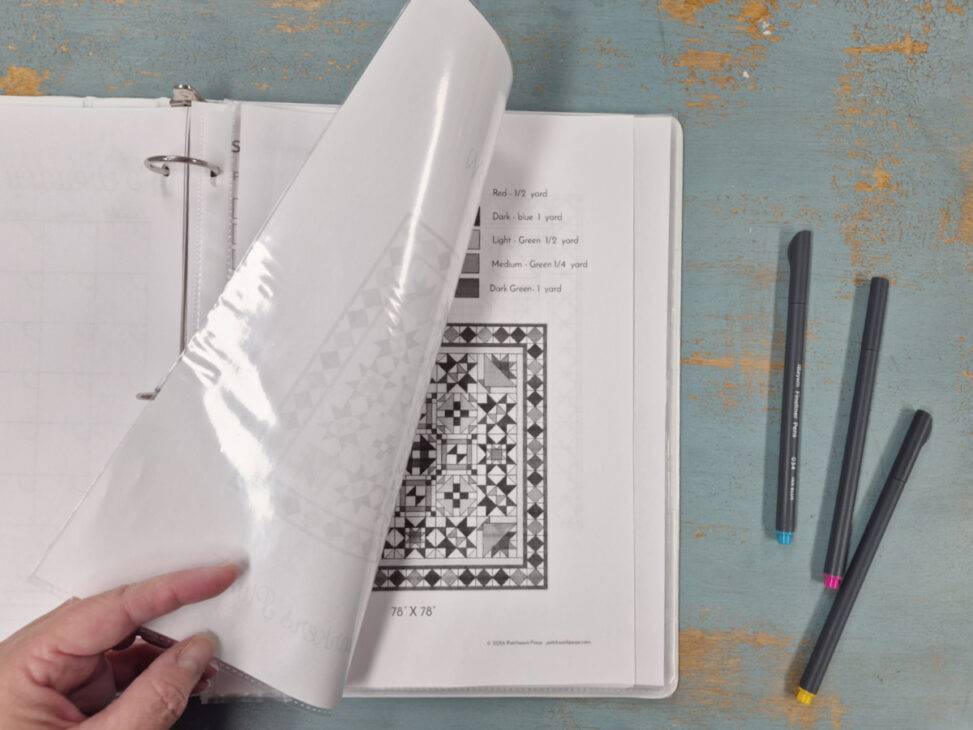
The Quilter’s Command Center is a simple binder system that keeps your quilting plans, projects, and references in one easy-to-reach place. No piles. No sticky notes. No half-remembered ideas floating around your sewing room.
Basic Quilt Sizes
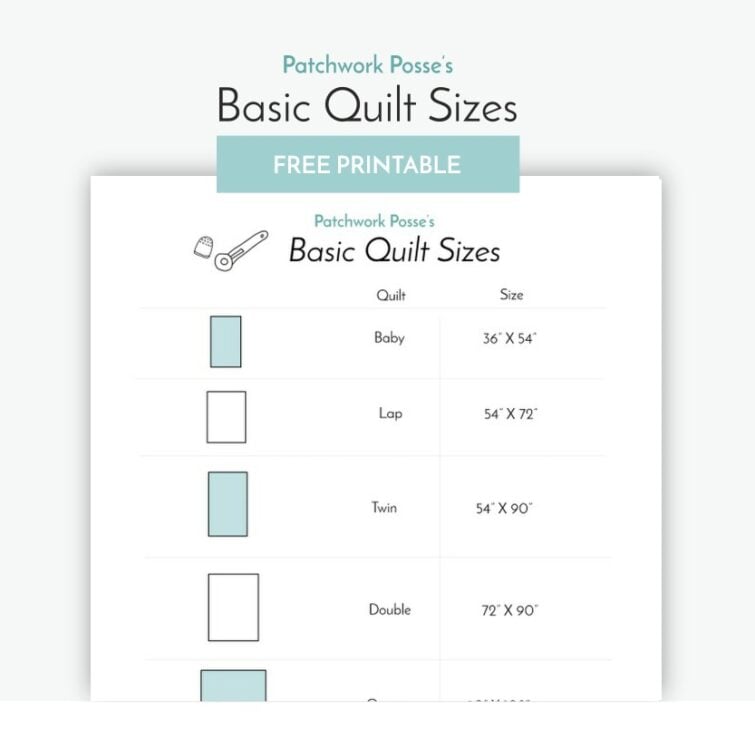
Another printable that you may find helpful – it’s in the quilt resource library along with additional printables. These are great additions to building your Quilter’s Command Center Binder.
Build Your Quilter’s Command Center Pages:
Access the Quilter’s Resource Library here (free guides)
Buy the Patchwork Planner to expand it even more
Get the Patchwork Planner inside Patchworkers Plus in 2026!! Get 1/2 off the first month

