
Dresden plates are one of those classic quilt blocks that look fancy but are surprisingly doable—especially when you use a Dresden plate ruler. If you’ve ever admired a Dresden and thought, that looks like a lot of work, this method is about to change your mind.
Using a ruler takes a lot of the guesswork out of the process. The blades come out consistent, the curves line up nicely, and the whole thing just feels more predictable. And predictable sewing is good sewing.
This tutorial walks you through how to make Dresden plates using a ruler. I’ll show you the steps in detail, but first, let’s talk about a few things that will make the process smoother before you even start cutting.
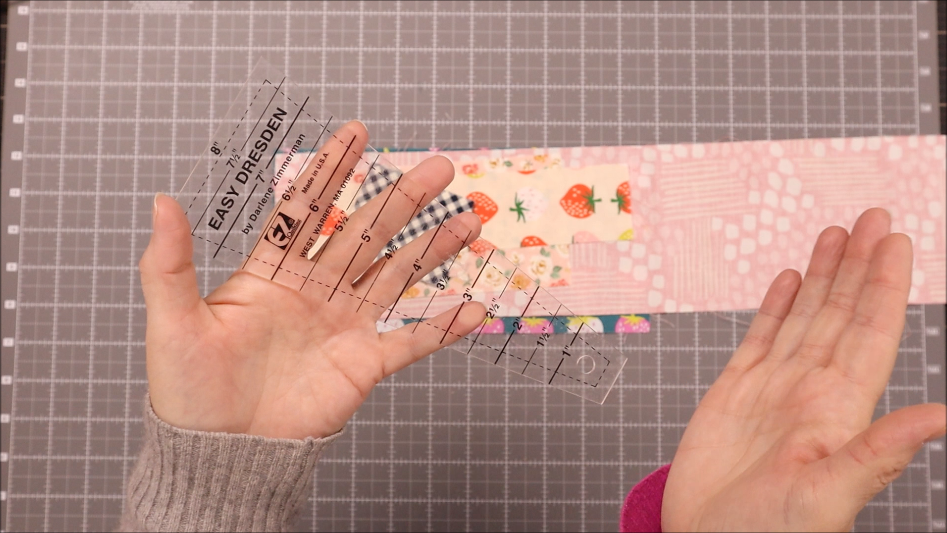
Why Use a Dresden Plate Ruler?
A Dresden plate ruler is designed to do one job really well: cut evenly shaped blades that fit together cleanly. That means:
- No math
- No trial-and-error sizing
- No wondering if your blades will actually make a full circle
If you like structure (or just want things to work the first time), a ruler is a great option—especially if you plan to make more than one Dresden.
Choosing the Right Ruler
Dresden plate rulers come in different sizes, usually labeled by the finished plate size (like 8″, 10″, or 12″).
A few things to keep in mind:
- Smaller plates are great for mug rugs, pillows, and mini projects
- Medium sizes work well for table runners and wall hangings
- Larger plates are better for quilts where the Dresden is the star
You don’t need every size. One ruler can go a long way, especially for small and medium projects.
Fabric Tips That Make Dresdens Easier
Dresden plates are very forgiving, but a few fabric choices can make the process easier—especially if this is your first time.
Helpful tips:
- Quilting cotton is your friend here
- Avoid super stiff or heavy fabrics
- Scraps work beautifully (even oddly shaped ones)
- Pressing matters—take your time
If you’re mixing a lot of prints, don’t overthink it. Dresdens shine when there’s variety.
How Many Blades Do You Need?
Most Dresden rulers are designed so that a specific number of blades makes a full circle. Common counts are 16 or 20 blades, depending on the ruler.
Before you start sewing, it helps to:
- Lay out all your blades in a circle
- Check that your color balance feels good
- Make swaps now, not after sewing
This quick layout step saves time later.
Pressing Makes a Big Difference
Dresden plates rely heavily on pressing. Clean presses give you:
- Sharper blade points
- Better alignment
- A flatter finished plate
Press as you go, and don’t rush this part. It’s one of those “do it once, do it right” steps.
Curved Edges + Rulers = Confidence
The curved outer edge of a Dresden can feel intimidating, but this is where the ruler really shines. Since every blade is cut the same way, the curve forms naturally as you sew.
Take your time sewing the blades together, and let the shape do the work. No stretching, no forcing—just guide it through the machine.
A Note About Templates vs. Rulers
If you don’t have a Dresden ruler, templates work just fine—and I’ve included a printable template option in the pattern as well. But if you already own a ruler (or plan to make Dresdens more than once), it’s a solid tool to have in your quilting drawer.
Use what you have. Use what works. That’s always the goal.
How to Use the Easy Dresden Plate Ruler

1- Place the ruler on top of the fabric. I have two fabrics layered. You can cut one or many at the same time.

2- Fold the WIDE side of the dresden plate, right sides together. Sew 1/4″ from fold to edge, use a locking stitch at the beginning and end of the stitch

3- Snip the corner, making sure you don’t snip the thread

4- Fold the point, right sides out

5- Use a stiletto or purple thang to push the point out

6- Make sure the seam is in the center of the point, press well

7- Place two dresden plates together, right sides facing. Stitch from edge to edge, making a locking stitch to secure it

8- Press the seam open
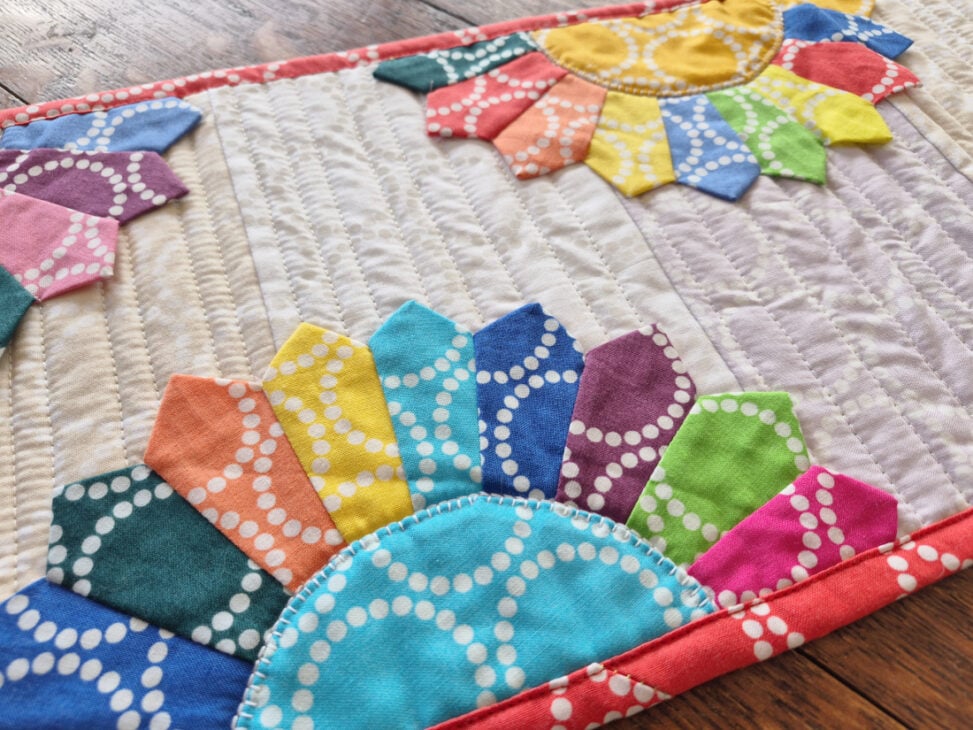
Ready to Sew?
Once your blades are cut and pressed, you’re ready to move into the step-by-step sewing process. Follow along with the tutorial below, and don’t worry about perfection—Dresdens are meant to be charming, not rigid.
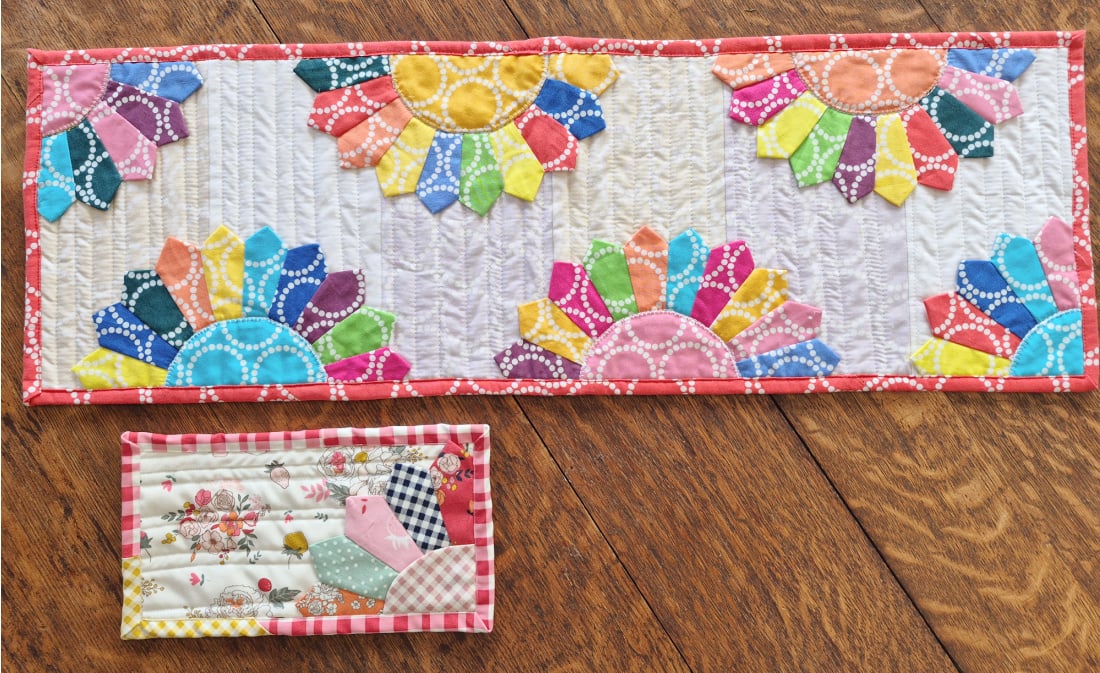
If you’re sewing the Dresden Plate Table Runner or Mug Rug from Make & Take Monthly, this ruler method works perfectly for both projects.
Grab a copy of the Dresden Plate Pattern inside Make & Take Monthly here, or join Patchworkers Plus and get it for free.
Let’s get sewing—and actually finish something.


