
If your fabric stacks are starting to look a little… messy, you’re not alone. Mine looked great right after folding—but the minute I started pulling pieces out, everything shifted, toppled, and the smaller cuts disappeared somewhere in the pile.
So I finally tried folding my fabric onto foam core boards—and it made a bigger difference than I expected.
In this post, I’ll walk you through why this method works so well, what sizes of fabric it’s best for, and how it can make finding (and keeping) your fabric a whole lot easier. I’ve also included a video showing exactly how I cut the boards and fold the fabric.
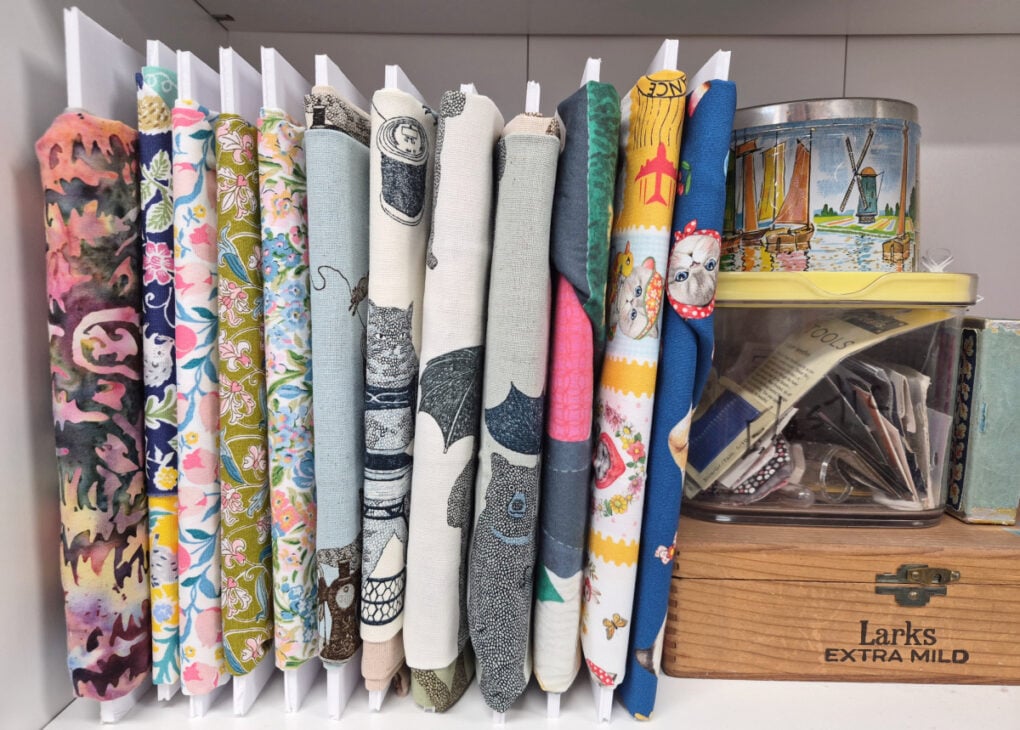
The biggest change with foam core boards is how your fabric is stored.
Instead of stacking fabric on top of each other, you’re storing it vertically—more like books on a shelf. That means you can:
- See more of your fabric at a glance
- Pull one piece out without messing up the rest
- Keep everything looking neat (even after using it)
No more digging through piles or refolding everything after grabbing one piece.
What Fabric Sizes Work Best
This method works really well for:
- Fabric larger than a fat quarter
- Yardage up to a few yards
That middle range is where it really shines. The fabric is big enough to wrap nicely around the board, but not so bulky that it becomes hard to handle.
For larger cuts (like 4–5 yards), it can start to feel a bit thick and heavy. It still works—but it’s not quite as clean or easy to manage.
For smaller pieces and scraps, they just don’t stay wrapped very well. I haven’t quite figured out a good system for those yet, so this method is really best for your “main stash” fabrics.
Foam Boards vs. Comic Boards
I do have comic boards on hand, but I haven’t used them yet for this.
Right now, I’m leaning toward foam core boards for a couple reasons:
- They feel sturdier
- They hold their shape better
- They seem like they’ll hold up longer with repeated folding and refolding
If you’re someone who pulls fabric in and out often (which… most of us are), that extra durability makes a difference.
Keeping Track of Your Fabric
One thing I’ve found helpful is adding a small note to each piece.
You can pin or clip a piece of paper right to the fabric with things like:
- Yardage amount
- Fabric line or designer
- Project idea (if you bought it for something specific)
It’s simple, but it saves you from guessing later—and helps you actually use what you have.
This is one of those changes that doesn’t take a lot of time, but makes your sewing space feel a lot more manageable.
You can actually see what you have.
You’re more likely to use it.
And you’re not constantly fixing messy stacks.
It’s not perfect for every single piece of fabric—but for that middle range of your stash, it works really well.
And honestly… it just looks nice too.
More Fabric Organizing Tips

Use leftover quilt blocks and make a fabric bin. Great for keeping those little scraps organized.
Free Thread Catcher

This easy to sew – and uses a selvedge for the top binding is great for catching your cut threads.
Spring Cleaning your sewing room – learn a few tricks to keep things a little better organized.

