
Learn how to reset your sewing room in just a few minutes so you can spend more time sewing and less time searching for tools, rethreading your machine, or trying to remember what comes next.
A sewing room reset isn’t about deep cleaning or reorganizing everything—it’s about creating a calm, ready-to-use space that supports your next sewing session.
Whether you sew every day or squeeze in time when you can, a simple reset at the end of a sewing session helps you come back with clarity and momentum.
When your space is ready, getting started feels easier—and finishing projects feels more doable.
Step 1- Clear the Surfaces
Start by clearing the surfaces you use most—the sewing table, cutting table, and ironing area. Putting tools back where they belong and tossing obvious trash like thread tails or unwanted scraps immediately makes the room feel calmer.
You don’t need to organize drawers or sort everything perfectly. The goal is simply to give yourself space to work without having to move piles out of the way next time you sit down.
Start with the areas you use most.
- Clear the cutting table
- Clear the sewing table
- Put tools back where they belong
- Toss obvious trash (threads, scraps you don’t want)
This isn’t about deep cleaning. It’s about giving your hands room to work the next time you sew.
Step 2- Reset the Sewing Machine
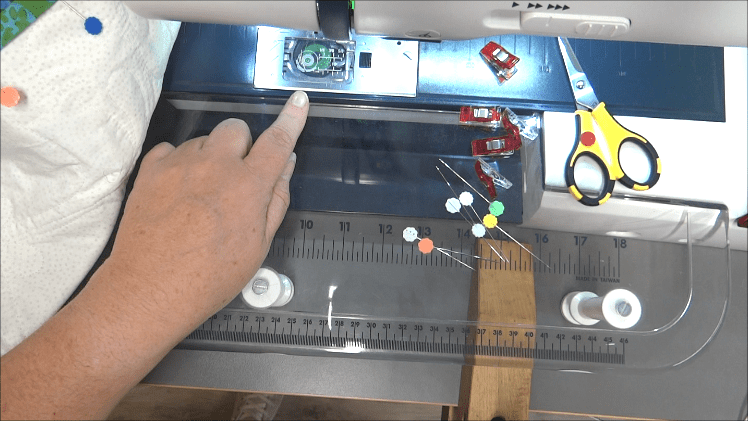
This step alone can prevent a lot of sewing frustration. A quick needle check, a bit of lint removal, and rethreading the machine can solve many of the problems that show up “out of nowhere.”
Taking a moment to test stitch on a scrap also gives you confidence before you start sewing again. When your machine is ready to go, you’re much more likely to jump back in instead of putting it off.
Most sewing frustration starts right here, so this step matters.
- Check or change the needle
- Clean lint from the bobbin area
- Rethread the machine
- Test stitch on a scrap
A fresh needle and a clean bobbin area solve more problems than almost anything else.
Step 3- Prep the Cutting Area
A cluttered cutting area slows everything down. Straightening the cutting mat, stacking rulers neatly, and checking your rotary cutter (or blade) makes your next cutting session smoother and more accurate.
You don’t need to put fabric away perfectly—just return it to a general spot so you’re not cutting around loose pieces later. Clean cuts are easier when your cutting space is ready.
You don’t need to reorganize drawers — just make the space usable.
- Straighten the cutting mat
- Put the rotary cutter away or change the blade
- Stack rulers neatly
- Return fabric to its spot
Clean cuts are easier when your cutting area is ready.
Step 4- Tidy the Ironing Station
A quick ironing station reset saves time and prevents frustration. Emptying or refilling the iron, wiping the soleplate, and replacing the pressing cloth keeps everything working as expected.
You’re aiming for “ready to press,” not spotless. When the ironing area is set up, pressing feels like part of sewing instead of an interruption.
A quick reset here saves time later.
- Empty or refill the iron (if needed)
- Wipe the iron soleplate
- Replace the pressing cloth
- Fold or straighten the ironing surface
You’re aiming for ready, not perfect.
Step 5- Fabric & Project Check
This step helps prevent projects from quietly becoming UFOs. Gather unfinished projects into one place and return stray fabric to the stash so pieces don’t get lost or mixed together.
Pull fabric for only one next project and label pieces if needed. Keeping your focus narrow makes it easier to pick up where you left off without feeling scattered.
This step keeps projects from turning into UFOs.
- Put unfinished projects in one place
- Return stray fabric to the stash
- Pull fabric for the next project only
- Label project pieces if needed
Keeping just one project front and center makes it easier to start again.

Step 6- Quick Supply Scan
Before you leave the room, do a fast supply check. Make sure thread colors, pins or clips, your seam ripper, and scissors are easy to find.
This small habit saves surprising amounts of time. When everything you need is within reach, starting again feels easy instead of annoying.
Before you walk away, do a fast check.
- Thread colors nearby
- Pins or clips filled
- Seam ripper easy to grab
- Scissors where you expect them
This prevents wasted time hunting for tools later.

Step 7- Set Yourself Up to Sew
This is the most important step in the entire reset. Take a moment to choose the next small step, lay out the pattern and fabric, and leave the machine ready to go.
If it helps, write yourself a quick note about what comes next. This eliminates the “what was I doing?” pause and lets you start sewing immediately the next time you sit down.
This is the most important part of the reset — and the easiest to skip.
- Choose one project to work on next
- Place the pattern and fabric together
- Leave the machine ready to go
- Turn off lights and iron when done
Ending your session this way makes starting again feel effortless.
Optional (If You Have Time)
If you have a few extra minutes, wiping tables, sweeping the floor, or sorting scraps can be nice. These steps are optional and should never stop you from finishing the reset.
Remember, this is not a deep clean. It’s a reset designed to support your sewing, not become another project.
Ending each sewing session this way makes your next one easier—and easier sewing time leads to more finished projects.
If you have a few extra minutes, these are nice — but not required.
- Wipe tables
- Sweep or vacuum the floor
- Sort scraps (or put them in a bin for later)
Remember, this is a reset, not a deep clean.
Get the Sewing Room Reset Printable
You can get this in a checklist format on the Free Guides page. If you are an email subscriber, just look at your email for the password to enter for accessing. If you aren’t, simply sign up and I’ll send it to you.
It’s two pages and will help you work through the steps and check them off as you go. Put it into your Quilter’s Command Center so you can use it over and over again.
You’ll find this checklist as well as the main pages for the command center, quilters cheat sheets, cutting guides and more.
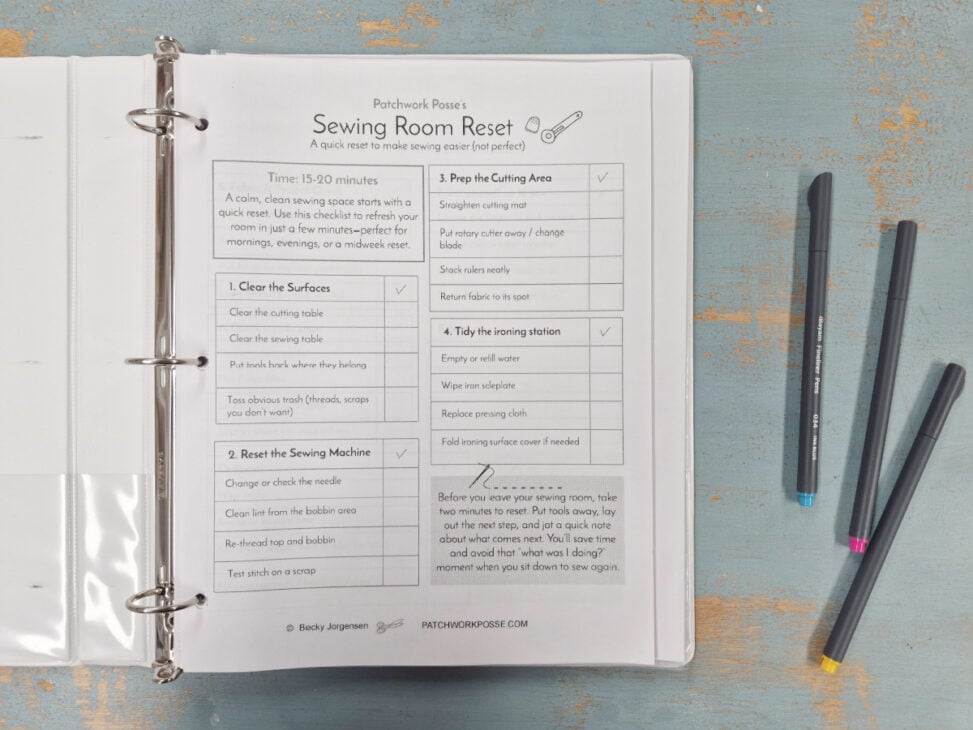
*More printables similar to this are inside the Quilters Resource Library.
Keep your projects organized all year long with the Patchwork Planner – every year there is a NEW version including a fun quilt along. Grab a digital copy or spiral bound. Either will help you finish what you start by keeping track of the projects you are sewing throughout the year. More info here.
A sewing room reset doesn’t have to take long to make a difference. A few minutes at the end of each sewing session can save you time, reduce frustration, and make it easier to sit down and sew the next time you have a moment.
The goal isn’t a perfect sewing room—it’s a space that’s ready when you are. When your tools are put away, your machine is set up, and your next step is clear, sewing feels lighter, calmer, and more enjoyable. And that’s what helps projects move forward and get finished.


